Rhinear Treatment

Beverly Hills, CA

Introduction

Introduction to Rhinear Treatment

When nasal airflow is restricted, it can affect sleep quality, focus, energy levels, and more. Dr. Arash Moradzadeh’s Rhinear treatment at AMora MD in Beverly Hills, CA, is designed to improve nasal breathing without traditional surgery.

Dr. Moradzadeh provides Rhinear treatment for patients throughout Los Angeles who want meaningful improvement in nasal airflow without altering the appearance of the nose. This in-office procedure focuses on strengthening and supporting internal nasal structures that collapse during breathing, a common but often overlooked cause of chronic nasal obstruction.

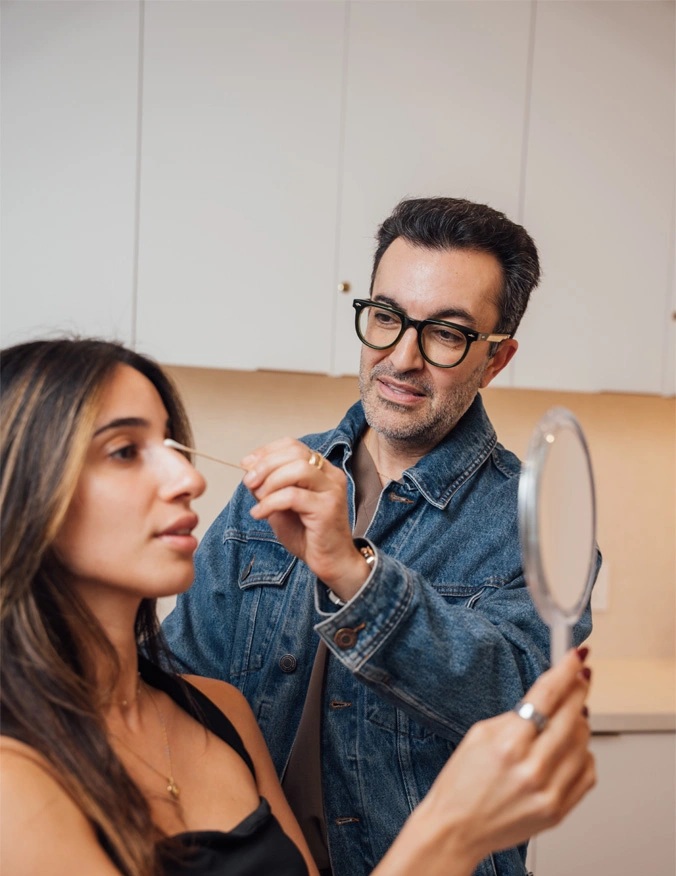
Dr. Moradzadeh is wearing a jean jacket and his glasses. he is holding a long q-tip along the patients nose. The patient has a smile on her face while looking at a mirror she holds in front of her. She has dark brown hair and dark eyes.

What is a Rhinear Treatment?

Rhinear is a minimally invasive nasal airway treatment that improves breathing by reinforcing weakened nasal valve structures. The nasal valve is the narrowest part of the nasal airway and plays a major role in airflow. When this area collapses during inhalation, breathing becomes restricted, even if the nasal passages appear open on exam.

Rhinear uses targeted technology to support and stabilize the internal nasal valve, helping it resist collapse during normal breathing.

Rhinear is especially helpful for patients who experience nasal obstruction during exercise, sleep, or deep breathing, and for those who have not found relief with sprays, allergy medications, or nasal strips.
Transparent logo template

Who Are the Best Candidates For a Rhinear Treatment?

The best candidates for Rhinear treatment are individuals with nasal obstruction due to internal nasal valve collapse. These patients often report difficulty breathing through the nose, especially during deep inhalation, exercise, or sleep, even when using allergy treatments or nasal sprays consistently.

Patients who notice improvement when pulling the cheek outward or using nasal strips often have nasal valve weakness and may benefit from Rhinear. It is also a strong option for individuals who want to avoid traditional nasal surgery or who have persistent breathing issues after prior nasal procedures.

During your consultation, Dr. Moradzadeh carefully evaluates nasal anatomy, airflow dynamics, and symptom patterns to determine whether Rhinear is the right approach or if another treatment would be more appropriate.

What Are the Benefits of a Rhinear Treatment?

One of the most significant benefits of Rhinear treatment is improved nasal airflow without surgery. By strengthening the internal nasal valve, Rhinear allows air to pass more freely through the nose, reducing the sensation of blockage or resistance during breathing.

Patients often notice better sleep quality after treatment. Improved airflow can reduce mouth breathing, nighttime congestion, and snoring related to nasal collapse.

Dr. Moradzadeh, wearing a jean jacket, shown examining a patient. Patients holding a mirror in front of her. - First step in Santa Barbara, CA Long shot of a granite rock wall

What’s the First Step?

The first step toward Rhinear treatment in the Los Angeles area is a consultation with Dr. Arash Moradzadeh at AMora MD in Beverly Hills.

Dr. Moradzadeh performs a detailed nasal examination and may use specialized tools to assess airflow and nasal valve function. He will review your medical history, previous treatments, and any prior nasal procedures. This thorough evaluation ensures that Rhinear is recommended only when it is likely to provide meaningful improvement.

If you are a good candidate, Dr. Moradzadeh will explain the procedure in detail, review expected outcomes, and answer any questions. In many cases, treatment can be scheduled shortly after the consultation.

What to Expect on the Day of a Rhinear Treatment

The procedure begins with topical and local anesthesia to ensure comfort. Most patients remain awake and relaxed throughout treatment.

Once the nose is adequately numbed, Dr. Moradzadeh carefully applies the Rhinear technology to the targeted areas of the nasal valve. The goal is to reinforce the internal nasal structures while preserving the natural nasal lining. There are no external incisions and no visible changes to the nose.

Patients may feel mild pressure or warmth during the procedure, but discomfort is usually minimal. After treatment is complete, patients are monitored briefly and can return home the same day.

Dr. Moradzadeh, wearing a jean jacket, shown examining a patients nose with a cotton swab. - Expect in Santa Barbara, CA
Transparent template

Rhinear Treatment Recovery

Your Guide to Post-Rhinear Treatment Care

It’s common to notice some nasal congestion, a feeling of fullness, mild tenderness, or slight swelling inside the nose after Rhinear treatment. Some patients even experience light crusting or dryness, which can be managed with saline sprays.

Most can return to work and routine activities within 1 to 2 days, but blowing the nose too aggressively is discouraged during early recovery.

Breathing improvement may not feel immediate for everyone, as internal swelling needs time to resolve. As healing progresses over the following weeks, nasal airflow continues to improve as the treated structures stabilize and provide better support to the nasal valve.

How Much Does a Rhinear Treatment Cost in Los Angeles, CA?

The cost of a Rhinear treatment in Beverly Hills and Los Angeles varies based on individual anatomy, the extent of treatment required, and whether Rhinear is combined with other procedures. Because Rhinear is considered a functional nasal airway treatment, insurance coverage may be available.

During your consultation, the AMora MD team will review pricing, insurance considerations, and any potential out-of-pocket costs.

Why Choose Dr. Moradzadeh?

In the Los Angeles area, Dr. Arash Moradzadeh brings his advanced expertise to nasal airway treatments, holding dual board certifications from the American Board of Facial Plastic and Reconstructive Surgery and the American Board of Otolaryngology. He is also a member of the American Academy of Facial Plastic and Reconstructive Surgery, reflecting specialized training in both nasal function and facial balance.

At AMora MD, Dr. Moradzadeh approaches nasal breathing issues with precision and restraint. He focuses on restoring airflow while preserving natural anatomy and avoiding unnecessary intervention. His deep understanding of nasal anatomy enables him to recommend treatments such as Rhinear only when they are truly appropriate.

Dr. Moradzadeh wearing a brown suit and white shirt, portrait posed

Rhinear Treatment FAQ’S

Schedule Your Consultation

If nasal obstruction is affecting your sleep, exercise, or daily comfort, Rhinear treatment may offer a minimally invasive solution. A consultation with Dr. Moradzadeh is the first step toward understanding your options and identifying the most effective approach for your anatomy.

Contact AMora MD to schedule your personalized evaluation in Beverly Hills or Los Angeles and take the next step toward easier, more comfortable breathing.